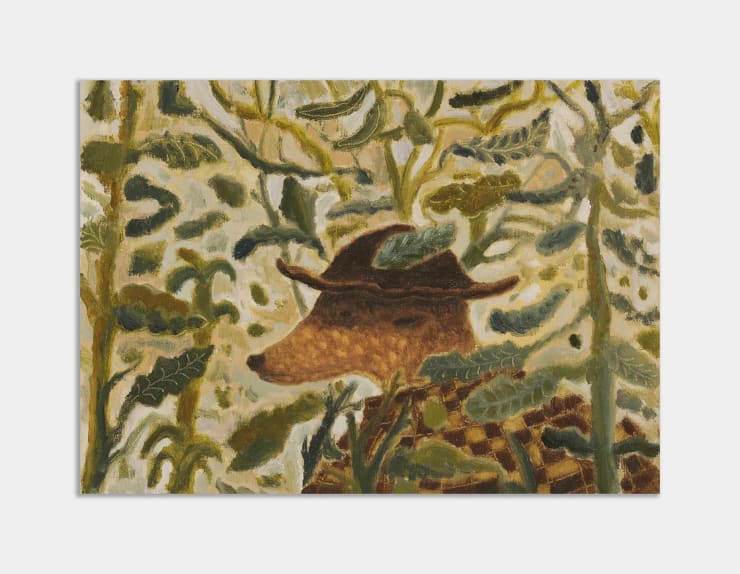
Joseph Dilnot b. 1997
-
Overview

I have always really loved the strange and the unexplainable. I like stories that don’t have a clear ending and seemingly unsolvable mysteries.
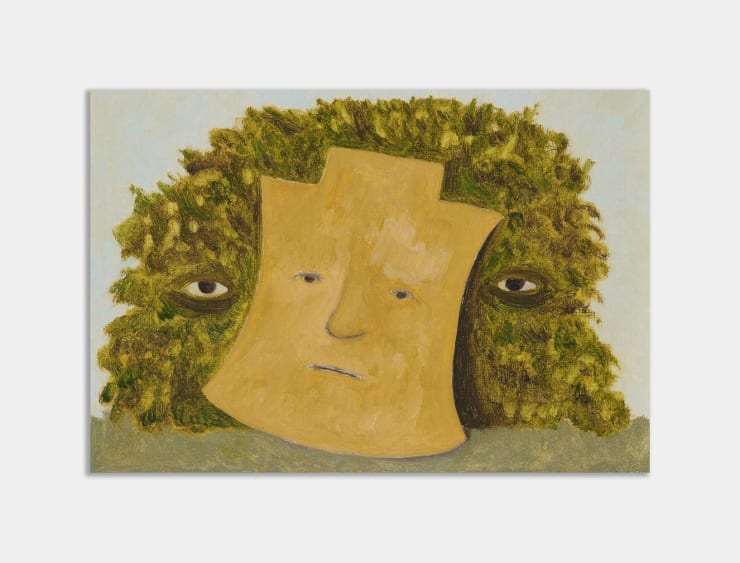
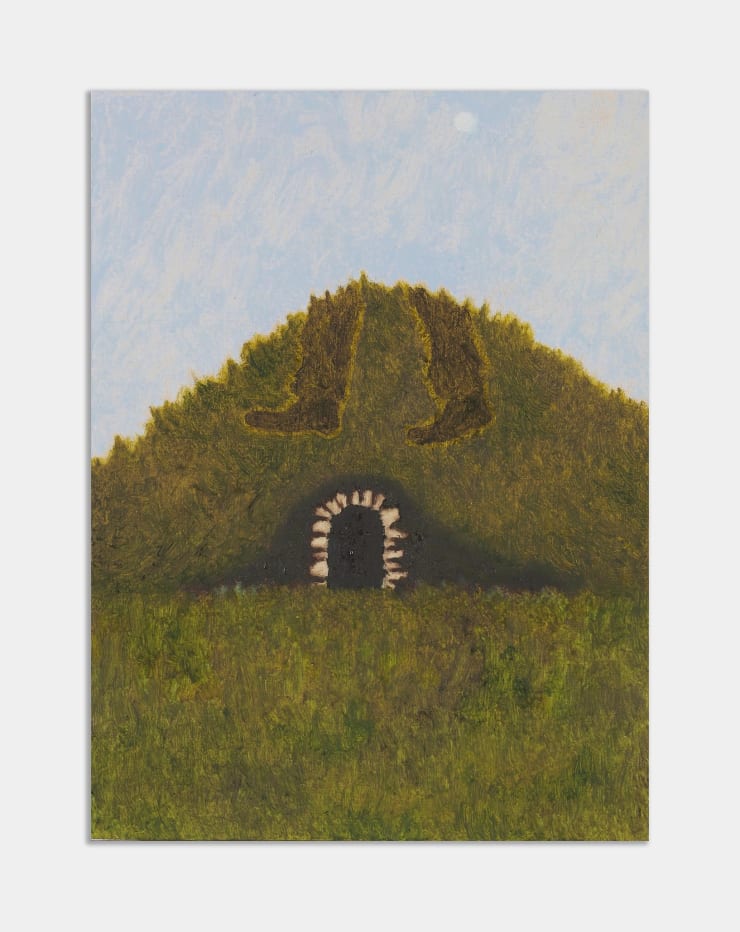
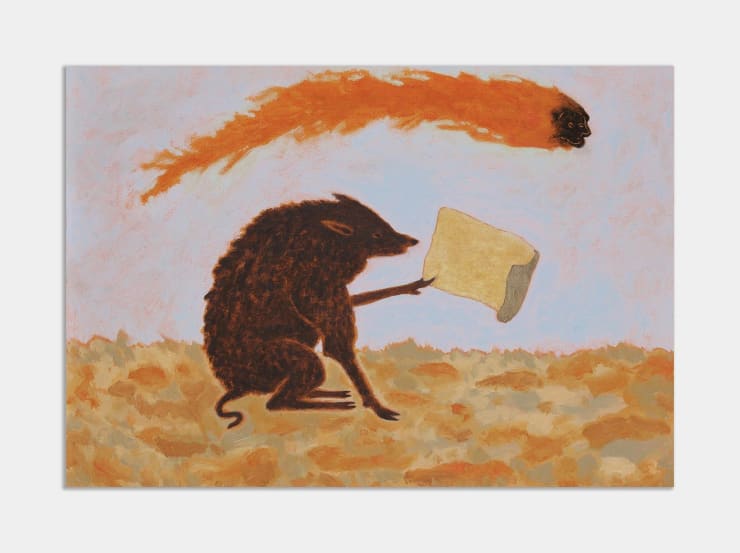
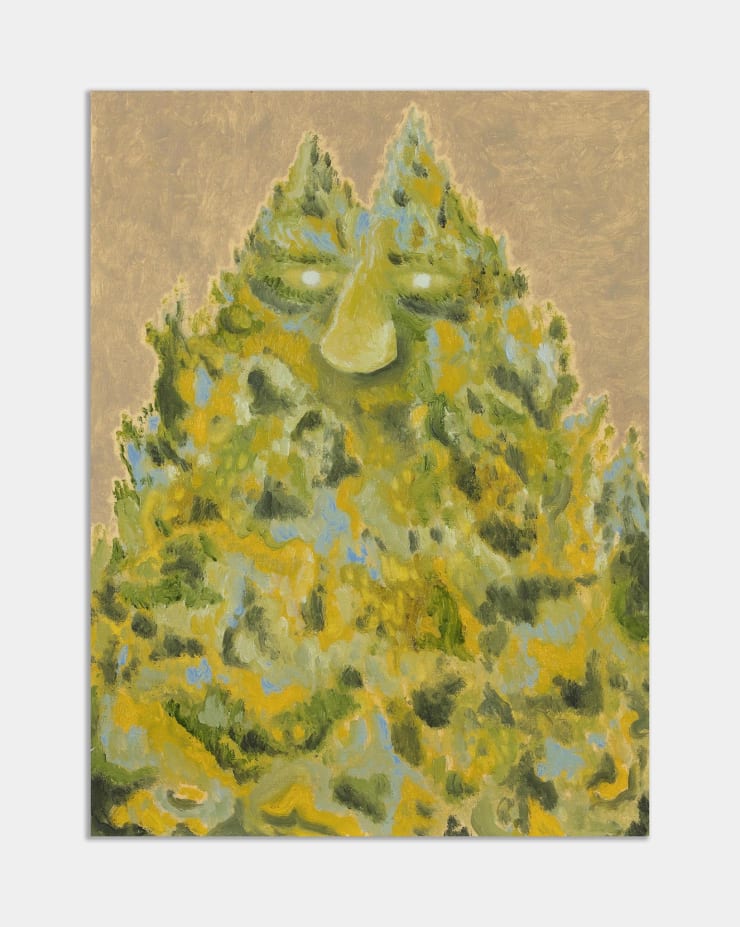
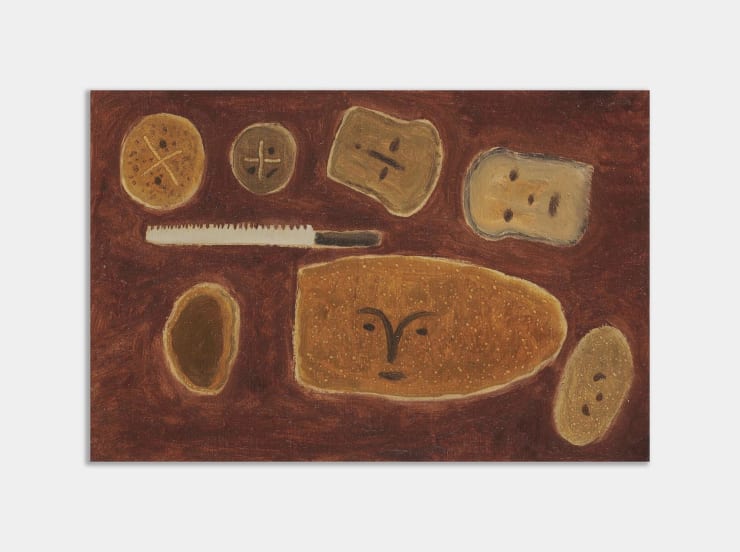
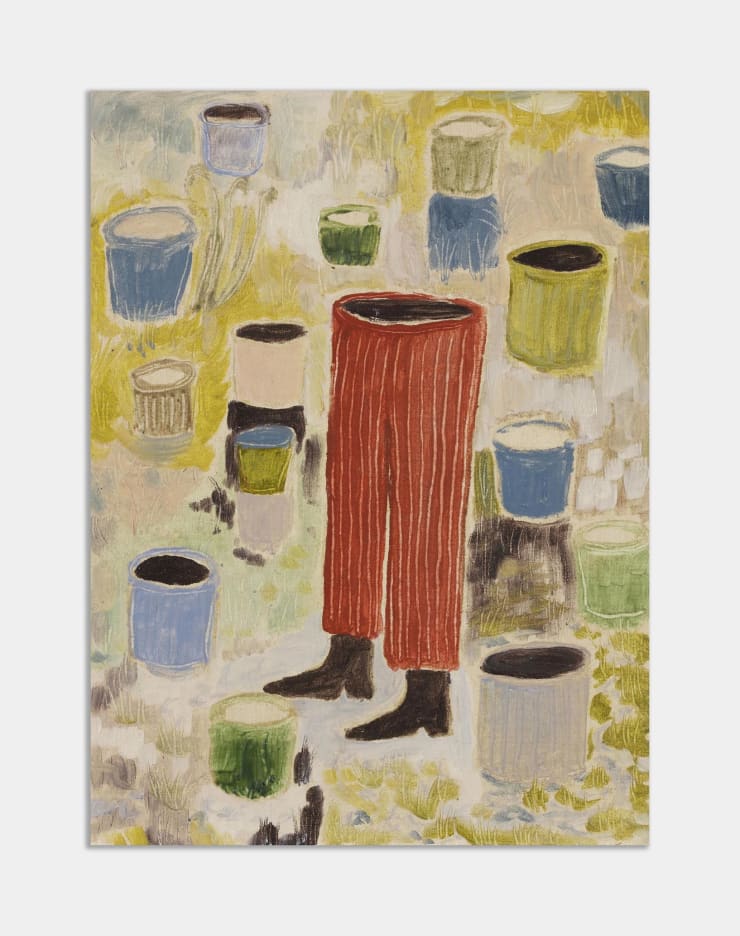
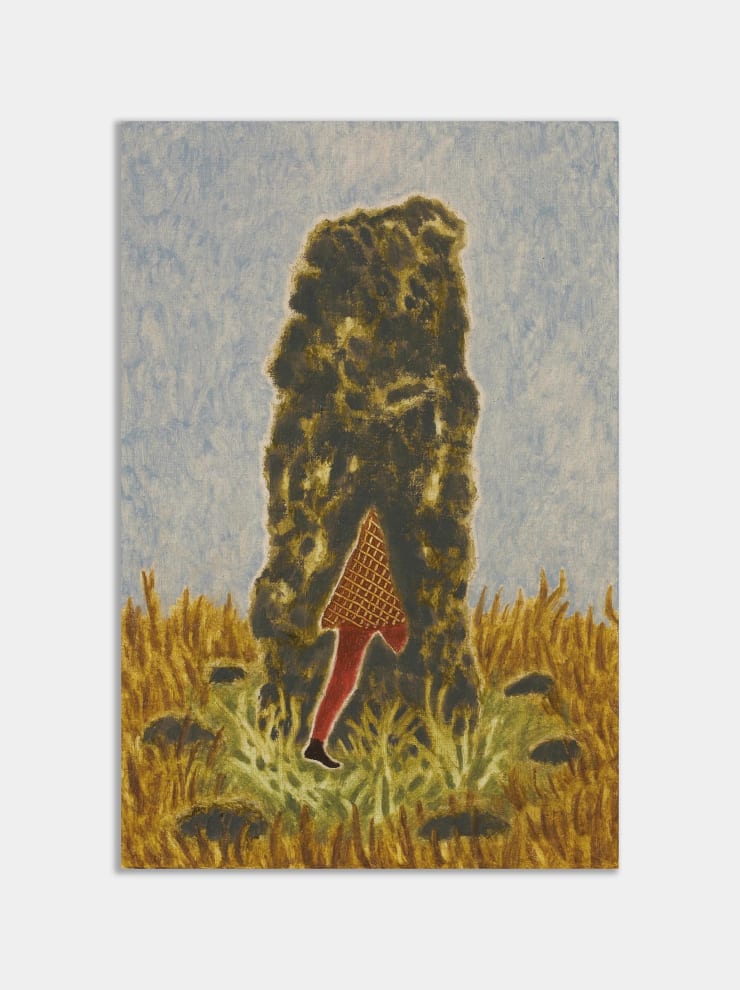
Joseph Dilnot is a British artist best known for his imaginative, lyrical oil paintings that blend personal mythology, nature, history, and the mysterious into richly symbolic scenes. He lives and works in East Sussex.Dilnot is largely self-taught, having pursued his artistic development independently after finishing school in 2015. In 2019, he received both the Newman Young Artist and RosePaul scholarships to study at The Essential School of Painting in London. His work has been exhibited widely in the UK and abroad, including at Hastings Contemporary, Glyndebourne, Weald Contemporary (Brighton/Worthing), and mepaintsme (USA).Dilnot’s paintings unfold as dreamlike landscapes inhabited by solitary figures, hybrid beings, and enigmatic motifs that evoke myth, memory, and metaphor. They are informed by historical sources such as the illuminated manuscripts of Pieter Brueghel and Hieronymus Bosch, as well as by his local landscapes of the English Channel and the South Downs. His paintings suggest poetic journeys through strange, beautiful worlds where figures wander in search of meaning and hidden truths.His style is lyrical and otherworldly, with soft, glowing colours and gentle humour woven into compositions that explore themes of wonder, grief, hope, and the human condition. Dilnot often leaves visual space for mystery and interpretation, inviting viewers into worlds that feel at once ancient and deeply personal. His work is held in private collections internationally.
Work will be available in an online presentation, 'Sound of the Past', with an accompanying essay by Matt Lippiatt. Framed prices from £500.
View the show here (from February 9th) -
Paintings
-
Joseph in Conversation
Patrick Davies talks to the artistWHEN DID YOU FIRST KNOW YOU WANTED TO BE AN ARTIST, AND WHAT DREW YOU SPECIFICALLY TO PAINTING? DO YOU COME FROM A CREATIVE BACKGROUND?
I have always been interested in creative activities. As a child, I drew, did creative writing, and tried to design board/card games. Making things has been an important outlet for me, but the idea of being an artist came much later. I do come from a creative background; I’m fortunate that both of my parents are artists and have always understood and encouraged my interests. My interest in painting came in my later teens, and the idea of being an artist a little after. I think the action of painting itself is what initially drew me in. The process of picking and mixing colours and then manipulating the paint itself to what you need is still a really rewarding feeling.
YOU’RE LARGELY SELF-TAUGHT. WAS THERE A REASON YOU DECIDED NOT TO GO TO ART SCHOOL?
I can think of a few! To cut a long and very teenage story short, I was pushed into areas of art I wasn't interested in from GCSE to Art Foundation. This resulted in me not being able to take part in lessons I would have very much liked to have been part of, such as drawing and painting lessons, and this caused friction between my tutors and me. To give an example. On my art foundation course, the fine art tutor quite proudly considered painting ‘dead’, and I ended up being the only person on the course painting. This, among other instances, resulted in quite a few heated moments, long walks around the campus and being threatened to be removed from the course. I can admit that I wasn't the easiest person to teach at times, but I was very passionate about what I wanted to do. These experiences made me feel like it would be more of the same at university, so I decided not to go and pursue my interests independently, alongside having a job. After some years working independently, I attended the Essential School of Painting on a once-a-week course from 2019-2020, which was a more positive experience but was unfortunately disrupted by the pandemicYOUR WORK IS SURREAL, EXPLORING THEMES OF LANDSCAPE, MYTHOLOGY, THE HUMAN FORM, AND FANTASTICAL CREATURES. WHAT DRAWS YOU TO THESE SUBJECTS?I have always really loved the strange and the unexplainable. I like stories that don’t have a clear ending and seemingly unsolvable mysteries. A lot of the worldbuilding in my favourite stories is told through strange characters or events you witness that imply a deeper history or meaning without a laboured explanation. I can’t pin the origin, but I have always been drawn to monsters and creatures; they have featured more than people in my works from childhood to the present day. That is not to say they don’t describe very human moments and display certain human archetypes; there is a freedom in not always describing a human form, and I think we like to find parts of ourselves in the nonhuman. Myths, the strange and the unexplainable in paintings all pose immediate questions to the viewer. It is in our nature to decipher and give meaning to things, and with how ambiguous paintings can be, these devices and themes provide an interesting exchange between the viewer and the painting.I UNDERSTAND THAT READING PLAYS AN IMPORTANT ROLE IN YOUR CREATIVE PROCESS AND DIRECTLY INFLUENCES YOUR WORK. COULD YOU TELL ME MORE ABOUT THAT?I’m really interested in history, and the majority of my reading involves it in one way or another. Most recently, my interest has been in Anglo-Saxon Britain, particularly in the poetry from that time, as they contain some really beautiful imagery and themes that are just as important and relevant now as they were when they were written. Also, because there aren’t as good recordings of this time as other periods in history, it allows you to speculate and fill the gaps yourself on information that is missing. This is particularly true of my native county of Sussex, which was a fairly minor player and location at the time, and there is a lot of space for me as an artist to insert my own imagery, mythology and events while still being inspired by what we do know.WHAT OTHER INFLUENCES INFORM OR INSPIRE YOUR PAINTING?As I have already mentioned, history plays a big part in my work; historical illuminated manuscripts have a fantastic directness that has certainly influenced me. I initially planned to go to university to study animal behaviour, a lot of my interests from this still reside in my paintings. The landscape I grew up in plays a big role in my work; the woodlands and rolling hills frequently feature.HOW SIGNIFICANT IS SCALE IN YOUR WORK? YOUR PIECES ARE SMALL, CREATING A SENSE OF INTIMACY WHILE STILL CONVEYING A LARGER NARRATIVE.
I think it is very important. There is nowhere to hide in a small painting, so it allows you to really focus on the ideas and feelings you want to convey. As you say, it gives a sense of intimacy; you can easily view the painting in its totality and really get an immediate sense of what you may like about it. I think that smaller works can contain a very magical quality that larger works, although impressive, can sometimes lack. I am slowly building a world in my paintings, and I prefer worldbuilding by suggestion, which can allow the viewer to put together narratives themselves.ARE THERE OTHER ARTISTS YOU ADMIRE, AND WHAT IS IT ABOUT THEIR WORK THAT INSPIRES YOU? DO ANY OF THEM HAVE A DIRECT INFLUENCE ON YOUR OWN PRACTICE?I was fortunate enough to catch the retrospective of the works of Hieronymus Bosch in 2016 (Noordbrabants Museum, Den Bosch, Netherlands), and it would be hard for me to say that it didn’t leave a great impression. Along with Pieter Bruegel the Elder, the sheer amount of activity and goings on in the paintings really captured my imagination, along with the balance of humour and the macabre. Other artists I would include would be Francisco Goya, Edvard Munch and Remedios Varo.HOW IMPORTANT IS THE VIEWER’S REACTION TO YOUR WORK?I leave room for the viewer in my works, and I certainly enjoy hearing their reaction. I welcome multiple interpretations. I’m always happy to be more specific about certain themes or imagery if asked, but I have found that a lot of people I speak to enjoy the more enigmatic elements.